Many people search for dreamwithjeff.com productivity advice after seeing the site named in articles about habits and goals. The name sounds personal and friendly. It also leaves a big question open: is this a real productivity tool, a blog or something else?
This article explains what the site claims to offer and what public checks report about it. It covers features, trust signals, limits and alternatives. It also shows you how to confirm the facts yourself, because website details can change.
Dreamwithjeff.com appears to be a WordPress blog about personal development, with articles on habits, goals, focus and mindfulness. Several promotional articles describe trackers, journals and integrations, but those claims are not confirmed by an official source. An automated scan from June 2026 gave the site a moderate risk score and flagged several concerns. Read it as a general blog, not as a proven productivity app, and do not share payment or login details until you verify who runs it.
Dreamwithjeff.com Productivity Review Table
| What to check | Reported finding | What it means for users |
|---|---|---|
| Site type | Personal development blog on WordPress | Expect articles, not software |
| Content | Habits, goals, focus, mindfulness | General advice on productivity |
| Apps and tools | Claims exist, no official proof found | Do not assume trackers or syncing |
| Pricing | No official price page confirmed | Treat paid claims as unverified |
| Scan result | 45 out of 100, moderate risk | Use extra caution |
| Warning signs | Casino links and no contact details | Verify before trusting it |
| Domain age | Registered in early 2023 | Not new, but age alone proves little |
This review draws on public scan data and independent articles. It does not claim hands on use, and the findings reflect what those sources reported at the time.
What Is Dreamwithjeff.com?
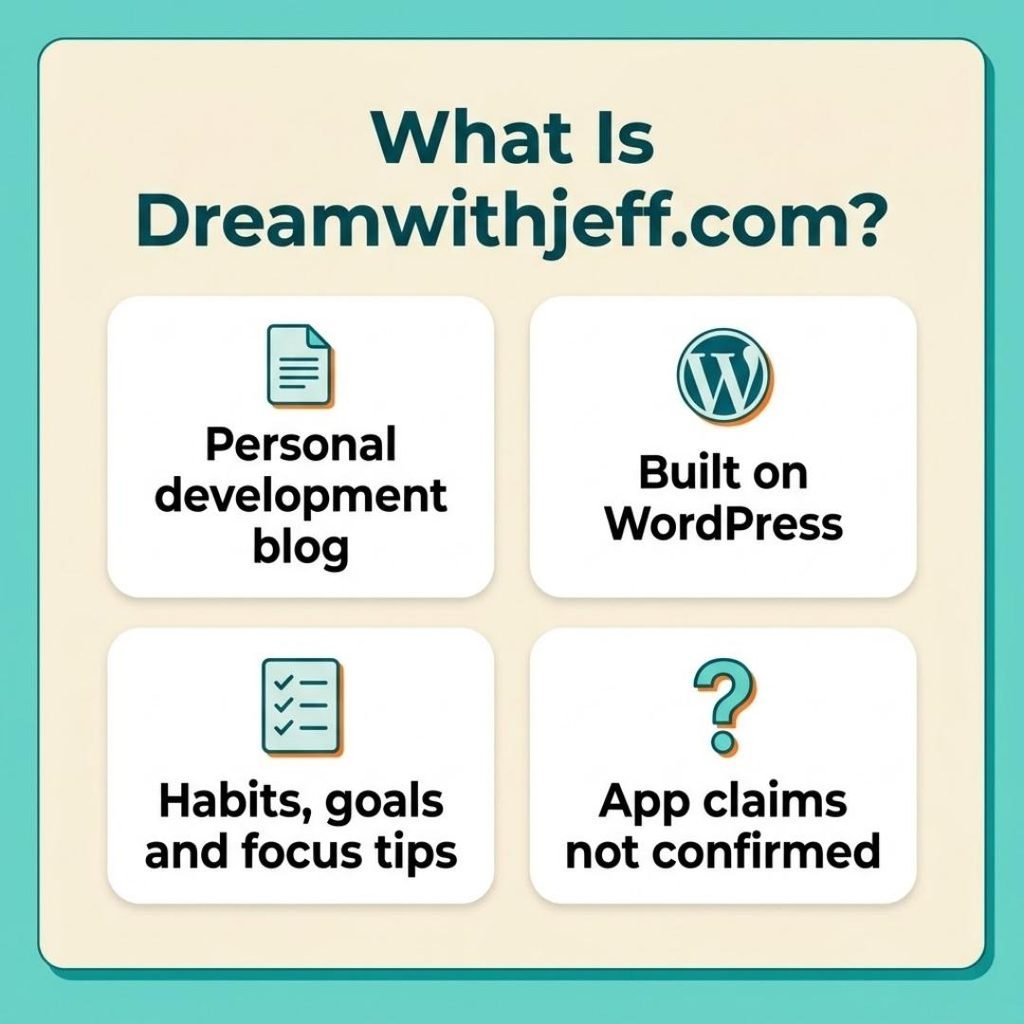
Dreamwithjeff.com is a website that presents itself around self improvement and goal setting. A scan by MalwareTips describes it as a personal development blog built on WordPress. The page that scanner captured carried generic articles on motivation, self discovery and productivity.
The scan also found no author biography. It found no clear person behind the “Jeff” in the name. That matters because readers often trust advice more when they know who wrote it.
What Articles About the Site Say It Covers
Many articles about the site describe the same topics. They list habit building, goal achievement, focus, mindfulness, burnout prevention and steady routines. Some call the advice practical and gentle, compared with hustle culture.
Those articles share one trait. Many repeat similar phrases and structures across unrelated domains. They read like promotional content, not independent reviews, so treat them with care.
Why Descriptions Conflict
Descriptions of the site do not match. Some articles call it a complete productivity system with goal trackers, journals, printable sheets and a community section. Others, such as a cautious write up on Celebrity Bio Net Worth, say it looks more like a content hub than a full app. That write up also says integrations and paid dashboards are not confirmed.
The cautious view fits the scan better. A blog with generic articles is a different thing from software with accounts, syncing and billing. Until you see a login page, a feature list and a pricing page on the site itself, assume you are looking at a blog.
Dreamwithjeff.com Productivity Advice: What the Site Claims
The advice attributed to the site is simple. It leans on small steps, steady habits and reflection instead of heavy systems. These ideas are common in the personal development world, and they are not unique to this site.
Small Steps and Habits
The main theme is that small actions repeated daily beat big bursts of effort. Articles suggest breaking large goals into short daily tasks. They also suggest picking one or two habits at a time.
This is sound general advice. Many habit researchers and coaches share it. Still, a blog post alone cannot test whether a method works for you, so try any tip for a few weeks and watch the results.
Focus and Mindfulness
Other posts link focus with mindfulness. They suggest cutting distractions, taking short breaks and reflecting on your week. Some say rest and sleep protect output over time.
These ideas are easy to try. A quiet hour, a short walk and a weekly review cost nothing. You do not need a special site to use them.
Trackers, Journals and Tools
Promotional articles also mention goal trackers, guided journals and printable planners. This is the least certain part of the story. The scanned page showed a blog, and no source I reviewed confirmed a working tool on the site.
If you want a tracker, check the site yourself for a visible download or login. If you cannot find one, use a tool from a known provider instead.
What an Automated Scan Found
The most useful public data comes from the MalwareTips scan, saved on June 10, 2026. It is an automated report, not a legal ruling. Still, it lists concrete findings that you can understand and check.
Positive Signs
The scan found several neutral or good signs. The domain was registered in early 2023, so it is not brand new. The site used a valid SSL certificate and sat behind Cloudflare. Google Safe Browsing did not list it.
Only one of 92 antivirus engines flagged it, and only as suspicious. The scan did not find malicious behavior. A single weak flag is not proof of harm, but it is worth noting.
Warning Signs
The scan also listed concerns. It gave the site a score of 45 out of 100, which falls in its moderate risk band. It said the site was not ranked in global traffic lists. A separate aggregator gave a trust score of 40 out of 100.
The scan also reported no business registration or owner details in public records. The report advised readers not to enter payment details or credentials on the site. That advice is cautious, and it is fair to follow it.
The Casino Link Issue
The most unusual finding is the external casino links. The scan reported that the page loaded resources from several online gambling domains. That does not fit a self help blog.
The reason is unknown. Possible explanations include paid links, affiliate deals or a hidden injection. The scan itself suggests a monetization angle. Without more evidence, readers should not guess, but they should treat this as a real warning sign.
Missing Contact and Ownership Details
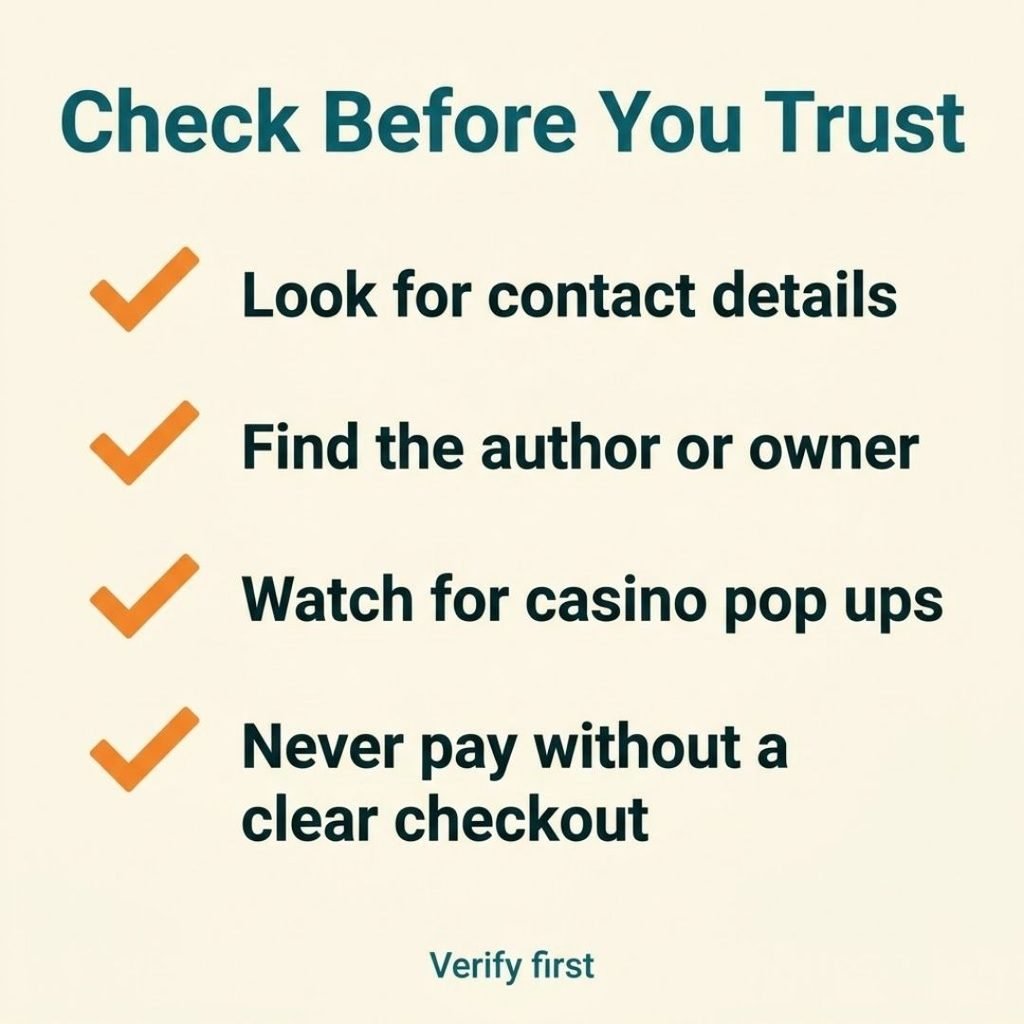
The scanned page showed no email, phone number or postal address. It also showed no linked social profiles. A site that asks for your trust should make it easy to reach a real person.
If you plan to buy anything, subscribe or share personal data, look for these details first. Their absence does not prove bad intent. It does make accountability harder if something goes wrong.
Promotional Articles and Why They Matter
A search for the site brings up many articles with similar titles and claims. The scan notes that these articles appear on unrelated domains. It says this pattern may point to paid guest posts or a network of blogs, though it could not confirm that.
This matters for readers in two ways. First, glowing articles are weak evidence, because they may be paid or copied. Second, repeated claims can make a feature seem real when no one has shown it.
The scan also found no scam reports on review sites or forums. That is a good sign, but it is limited. A lack of complaints can also mean a lack of users.
Why the Name Causes Confusion
The name suggests a personal brand built by one person named Jeff. Readers may expect a coach, an author or a creator with a clear story. The scan found no such person in the public data it checked.
This gap makes the site harder to judge. A named expert can be checked through books, talks or past work. An unnamed author cannot. When you cannot trace advice to a real person, give it less weight and test it against trusted sources.
Pricing, Apps and Integrations
No official pricing page was confirmed. Some promotional articles ask whether the site is free, but they do not give a reliable answer. Others mention syncing with other apps without naming a feature on the site.
So treat every price, plan and integration you read about as unverified. Reading a public article seems to cost nothing. Anything beyond that needs proof from the site itself, such as a clear checkout page, a refund policy and company details.
Never pay by gift card, crypto or bank transfer to an unfamiliar site. A credit card or a trusted payment service gives you more ways to dispute a charge.
Who May Find Dreamwithjeff.com Useful
Casual readers may find a few simple ideas on habits and goals. People who like short, plain articles may enjoy the tone. The advice suits beginners who want gentle steps instead of strict systems.
Students and workers can also use the topics as prompts. A post on weekly reflection, for example, may spark a routine you build yourself. In that case the site works as inspiration, not as a tool.
Who Should Look Elsewhere
Anyone who wants verified software should look elsewhere. So should readers who want expert, credentialed advice on mental health or career choices. For those needs, rely on licensed professionals and established providers.
People who need clear contact details, accounts or support should also pick another source. This site does not show those basics in the scanned data.
Limitations to Keep in Mind
The first limit is trust data. The score is moderate, traffic is low and ownership is unclear. These signs call for caution.
The second limit is evidence. Most claims about features come from promotional articles. No official source I found confirms them.
The third limit is depth. General advice on habits can help, but it rarely fits every person. Generic posts without author credentials carry less weight than expert guidance.
The fourth limit is time. The scan dates from June 2026, and the promotional articles are several months old. The site may have changed since then, so check it again before you decide.
How to Check Dreamwithjeff.com Yourself
You do not need special skills to run a basic check. Follow these steps.
- Type the address yourself instead of clicking a link.
- Look for a contact page, an about page and an author bio.
- Check whether any tracker, login or download actually exists.
- Run the domain through a public scanner and read the details.
- Watch for pop ups or redirects to gambling pages.
- Search for reviews that are not hosted on similar looking sites.
Keep notes as you go. If you find a contact email, send a short question and see whether a real person replies. A clear answer is a good sign, while silence is a reason to wait.
Common Mistakes When Judging a Productivity Site
The first mistake is trusting a friendly name. A personal name and a warm tone do not prove a real person or a real business stands behind a site.
The second mistake is trusting repeated claims. When many articles say the same thing, it may only mean they share a source or a sponsor.
The third mistake is trusting one score. Scanners use different data, so check more than one and read the reasons behind each score.
The fourth mistake is judging by looks. A clean layout and good grammar are easy to copy. Look for names, dates, sources and a way to reach the team.
Productivity Tips You Can Use Without Any Site
Good habits do not depend on one website. These general tips come from common productivity practice, not from the site.
Start by picking one goal for the week. Write it in one sentence and list the next small step. Block a short time each day for that step, even ten minutes.
At the end of the week, review what worked. Keep what helped and drop what did not. A paper notebook works as well as any app for this routine.
Protect your focus too. Turn off alerts during work blocks. Take short breaks and sleep enough. These basics often matter more than any new tool.
What to Do If You Already Shared Details
If you entered a password on the site, change it right away. Do the same on any other account that uses the same password. Turn on two step sign in where you can.
If you paid, contact your bank or card provider and ask about a dispute. Keep screenshots and receipts. Watch your email and bank activity for odd messages in the weeks that follow.
Alternatives to Dreamwithjeff.com
The right alternative depends on what you need. Each option below serves a different goal.
- Todoist suits people who want a simple task list with reminders.
- Notion suits people who want notes, plans and trackers in one workspace.
- Trello suits people who like visual boards for projects.
- A paper planner suits people who want no screens and no sign up.
For habit advice, books by known authors and articles from established publications list their authors and sources. That makes the claims easier to check.
FAQs About Dreamwithjeff.com Productivity
Is dreamwithjeff.com a productivity app?
No app was confirmed. Scan data describes a personal development blog, and claims of trackers or integrations come from promotional articles without official proof.
Is dreamwithjeff.com safe to use?
A June 2026 scan gave it a moderate risk score and flagged casino links and missing contact details. Avoid sharing payment or login details.
Is dreamwithjeff.com free?
Reading public articles appears to be free. No official pricing page was confirmed, so treat any price you read elsewhere as unverified.
Who runs dreamwithjeff.com?
Public scan data found no named owner or business registration. The page showed no author bio or contact details.
Conclusion
Dreamwithjeff.com looks like a general personal development blog, not a proven productivity tool. Its advice on small habits and focus is simple and common. The scan data adds real cautions, including casino links, no contact details and unclear ownership.
Casual readers may find a few useful ideas. Anyone who plans to pay, sign up or share personal data should verify the owner, pricing and features first. Check the evidence yourself, and treat big claims as unverified until you see proof.
Pingback: DreamWithJeff com Explained: What It Is and Is It Legit? - Centowise
Pingback: Zvodeps: What It Means and What Its Websites Really Claim - Centowise
Pingback: 35-ds3chipdus3 Code: What It Means and Is It Real in 2026? - Centowise