If a friend just texted you “what’s up homie” or called you their “homey” in person, you are probably wondering what the word actually means and whether there is a right way to spell it. Homey or homie is a casual slang term for a close friend or someone from your neighborhood, and both spellings are used interchangeably across texting, social media and everyday speech. This guide breaks down the meaning, the origin, the correct usage and the small differences between how people spell and use this popular slang word today.
By the end of this article you will know exactly what someone means when they call you homie, how the word evolved from an older term, when it fits into a sentence and how it shows up differently depending on who is using it. We will also cover the less common meaning of homey as a cozy adjective and a few close synonyms, so you never mix up the two versions again.
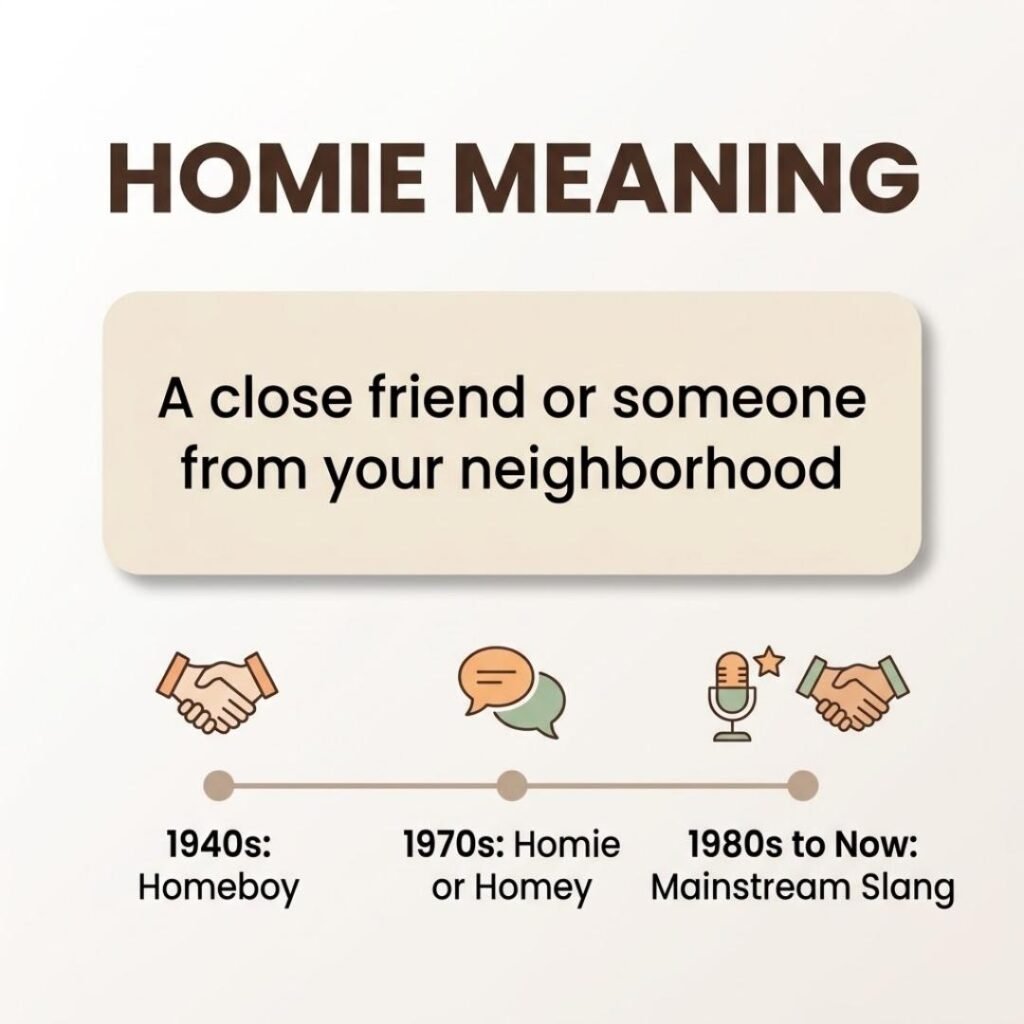
Homey or homie means a close friend, buddy or someone from your neighborhood. It comes from the older word homeboy and is most often used as a friendly, informal term of address between people who know and trust each other. You may hear it in casual conversations, texts and social media when someone wants to sound warm, relaxed or familiar. For example, someone might say, “What’s good, homie?” when greeting a friend or “She’s my homey from way back” when talking about someone they have known for years. The exact tone depends on the relationship, but it usually suggests friendship, familiarity and a sense of connection.”
What Does Homey or Homie Mean
At its core, homey or homie refers to a person you consider a close friend, someone you trust and feel comfortable around. It carries a warmer, more personal tone than words like acquaintance or coworker. People use it the same way they might use buddy, pal or bestie, though homie has a distinctly urban and hip hop flavored history behind it.
The word can function in a few slightly different ways depending on the sentence.
- As a noun for a friend, such as “he’s my homie.”
- As a term of address when greeting someone, such as “hey homie.”
- As a possessive phrase showing closeness, such as “my homies from high school.”
- As a way to describe a group, such as “the whole crew of homies.”
In most modern conversations, especially in texting and on social media, homie simply signals friendliness and familiarity. It does not require the two people to actually be from the same neighborhood anymore, even though that was the original idea behind the word. Many people now use it for online friends, coworkers they get along with or even people they have only met once but instantly clicked with.
Homey or Homie: Which Spelling Is Correct
Both homey and homie are accepted spellings and dictionaries list them as variants of the same slang term. Neither spelling is technically more correct than the other, but there are some patterns in how people use them.
Homie tends to show up more often in music, on social media and in casual text messages, especially among younger users. Homey is the older spelling and still appears frequently, particularly in everyday speech and in regions where the slang has been common for decades. According to Dictionary.com, homie is simply listed as a variant of homey, and the two are treated as one word with two accepted forms.
If you are writing content, texting a friend or posting online, you can use whichever spelling feels natural. Neither one will confuse the reader, since both are widely recognized. Some writers even switch between the two depending on the tone they want, using homey for a slightly softer feel and homie for a sharper, more modern sound.

Where the Word Came From
Homey or homie did not appear out of nowhere. It is a shortened form of an older term, homeboy, which has roots stretching back much further than most people realize.
- Homeboy first appeared in African American Vernacular English in the 1940s.
- It originally described someone from your hometown or neighborhood, not just any friend.
- By the 1970s, the shortened forms homie and homey were common in Black communities across the United States.
- The word later spread through Latino and Chicano communities during the same decades.
- Hip hop culture in the 1980s and 1990s pushed the term into mainstream American English.
- By the 2000s, the word had settled into everyday slang used across nearly every demographic.
Linguists at Etymonline trace the shortened form homie back to the 1970s, noting that it developed directly from homeboy. Interestingly, the exact same spelling homey also existed decades earlier in New Zealand slang, where it referred to a recently arrived British immigrant, though that usage is completely unrelated to the American slang term most people know today. Some word historians also point to earlier military slang, suggesting soldiers from the same hometown called each other homeboy long before the shortened version caught on in civilian life.
Over time, the word lost its strict requirement of shared geography. You no longer need to be from the same block or the same city for someone to call you their homie. The word shifted from describing where you are from to describing how close you are to someone, which is a common pattern in slang evolution. Many words that once described a specific group eventually loosen up and become general terms of affection once enough people start using them casually.
How to Use Homey or Homie in a Sentence
Since homey or homie is informal slang, it fits best in casual conversation rather than formal writing. Here are a few natural examples of how the word gets used.
- “This is my homie Marcus, we grew up together.”
- “What’s good, homie? Haven’t seen you in a while.”
- “She brought her homegirl and a couple of homies to the party.”
- “I’m just chilling with my homies this weekend.”
- “You already know I got you, homie.”
- “Shoutout to all my homies who showed up tonight.”
Notice how the word slides easily into greetings, introductions and casual statements about friendship. It rarely appears in professional emails, resumes or formal writing, since the tone is too relaxed for those settings. If you are unsure whether a setting calls for slang, a safe rule is to save homie for texts, group chats and conversations with people you already know well.
Homey or Homie in Texting and Social Media
When people search for what homie means in text, they are usually seeing it used as a warm, low effort way to address a friend online. In texting and on platforms like Instagram, TikTok and Snapchat, homie often shows up in comments, captions and direct messages as a quick way to show closeness.
Common texting examples include:
- “lol you’re my homie fr” (for real)
- “happy birthday homie”
- “big up to my homies”
- “who’s coming through, homies?”
- “love you homie, stay safe”
The word works well in short, casual messages because it instantly signals friendliness without needing extra explanation. It is also gender neutral in most modern usage, even though homeboy and homegirl are the more gender specific originals it came from. Because it takes so little effort to type, homie has become one of those default words people reach for when they want a message to feel warm without sounding overly formal or distant.
Regional and Generational Differences
Like most slang, homey or homie is not used the exact same way everywhere. In some regions, especially parts of the West Coast and the South, the word still carries a strong connection to neighborhood identity and community. In other areas, it has simply become a general purpose word for any close friend.
Generationally, older speakers who grew up hearing homeboy in the 1970s and 1980s may lean toward homey, while younger speakers who grew up with hip hop and social media often default to homie. Neither group is wrong, since the word has always shifted shape depending on who is using it and where they picked it up.
It is worth noting that the word can carry gang related overtones in certain contexts, since homeboy and homie have historical ties to gang culture in some communities. In everyday conversation among friends, however, the word is almost always used in a purely friendly, non threatening way. As with most slang tied to a specific culture, tone, setting and relationship all matter more than the word itself when it comes to how it lands.
Other Meanings of Homey You Should Know
There is a second, completely different meaning attached to the spelling homey that has nothing to do with friendship. As an adjective, homey describes something cozy, comfortable and homelike, such as a warm living room or a welcoming small restaurant.
For example, “the cabin felt so homey with the fireplace going” uses homey as a description of comfort, not as a way to refer to a person. This adjective form of homey has its own separate history, tracing back to the word home plus the suffix y, and it is unrelated to the slang noun version.
Context almost always makes the meaning obvious. If homey is describing a place, a room or an atmosphere, it means cozy. If it is describing a person, as in “my homey,” it means a close friend. A quick trick is to check whether the word is describing an object or a person, since that alone will tell you which meaning applies.
Words Similar to Homey or Homie
If you want to mix up your vocabulary while keeping the same friendly tone, there are several words that carry a similar meaning to homie.
- Buddy, a general term for a close or casual friend.
- Pal, a slightly older sounding but still common word for a friend.
- Bestie, used for a best friend, often among younger speakers.
- Homeboy or homegirl, the original gender specific versions of homie.
- Bro or sis, casual terms used regardless of actual family relation.
None of these words carry the exact same cultural history as homie, but they all fill a similar role in casual conversation.
Frequently Asked Questions
Is homey the same as homie?
Yes. Both spellings mean the same thing, a close friend, and dictionaries treat them as interchangeable variants of one another.
What does it mean when a guy calls you homie?
It usually means he sees you as a friend rather than a romantic interest, similar to calling someone buddy or pal.
Is homie an offensive word?
No, homie is generally friendly and casual, though it has historical ties to gang slang in some regions and contexts.
Where does the word homie come from?
It comes from homeboy, a term from African American Vernacular English in the 1940s that later shortened into homie by the 1970s.
Can you call a girl homie?
Yes, homie is commonly used in a gender neutral way today, even though homegirl was historically the female specific version.
Does homie mean the same thing in every region?
Mostly yes, though some regions still tie it closely to neighborhood identity while others use it as a general term for friends.
Conclusion
Homey or homie is a friendly slang word for a close friend, shortened from the older term homeboy and shaped by decades of African American, Latino and hip hop culture. It has traveled a long way from its original meaning of someone strictly from your hometown to a much broader word that now applies to almost any close friend you trust. Both spellings are correct, both show up constantly in texting and casual speech, and both carry the same warm, familiar tone no matter which version you choose to use.
The only real trick is remembering that homey can also describe a cozy place, so context matters more than spelling when you come across the word in different situations. Once you know the history, the everyday use, the regional differences and a few close synonyms like buddy, pal or bestie, you will never second guess what a friend means when they call you their homie again.
Pingback: PTSO Meaning in Text: What Does PTSO Mean? - Centowise