Many parents and curious readers type Tristan meaning in the Bible into Google every day. It makes sense. Tristan is a strong name with a soft and poetic feel. People want to know if Scripture holds it and what it might mean for their faith.
Here is the honest answer up front. The name Tristan does not appear anywhere in the Bible. But that is not the end of the story. In this guide you will learn where the name really comes from. You will also see which Bible stories match its meaning and how to use it with faith.
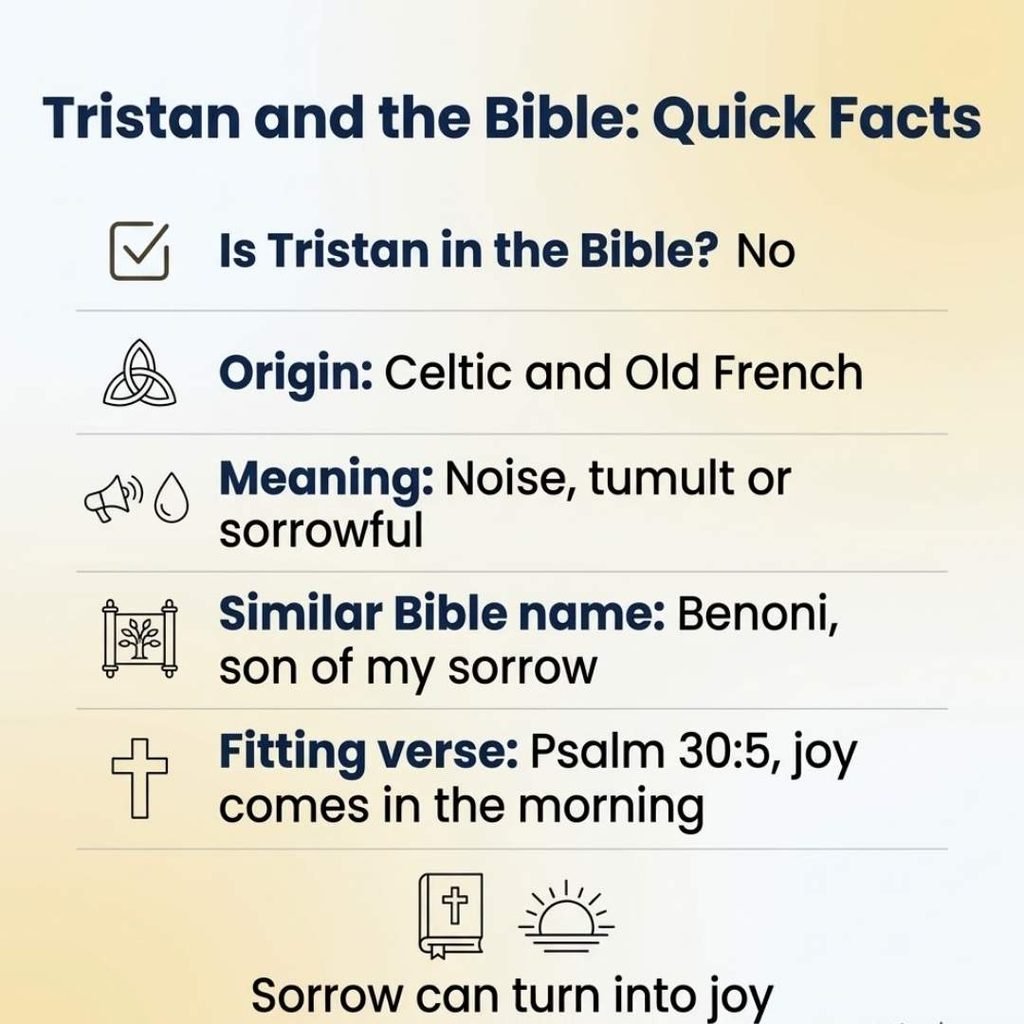
Tristan is not a biblical name. It has Celtic and Old French roots. It comes from a Welsh word meaning noise or tumult and was later shaped by the French word triste, meaning sad or sorrowful. No Bible character is named Tristan. Still the theme of sorrow turning into joy runs all through Scripture.
Is the Name Tristan in the Bible?
No. You will not find Tristan in the Old Testament or the New Testament. No prophet, king, apostle or disciple carried this name. You can search every major Bible translation and get the same result.
This surprises some readers. Websites often write about Tristan as if it were a Bible name. Some posts link it to Hebrew words or to verses about grief. Those posts are usually spiritual reflections. They are not proof that the name is in Scripture.
That does not make the name bad or wrong for a Christian family. Many loved names are not in the Bible. Think of names like Grace or Hope. Both were chosen by believers for centuries because of what they mean.
What Does the Name Tristan Really Mean?
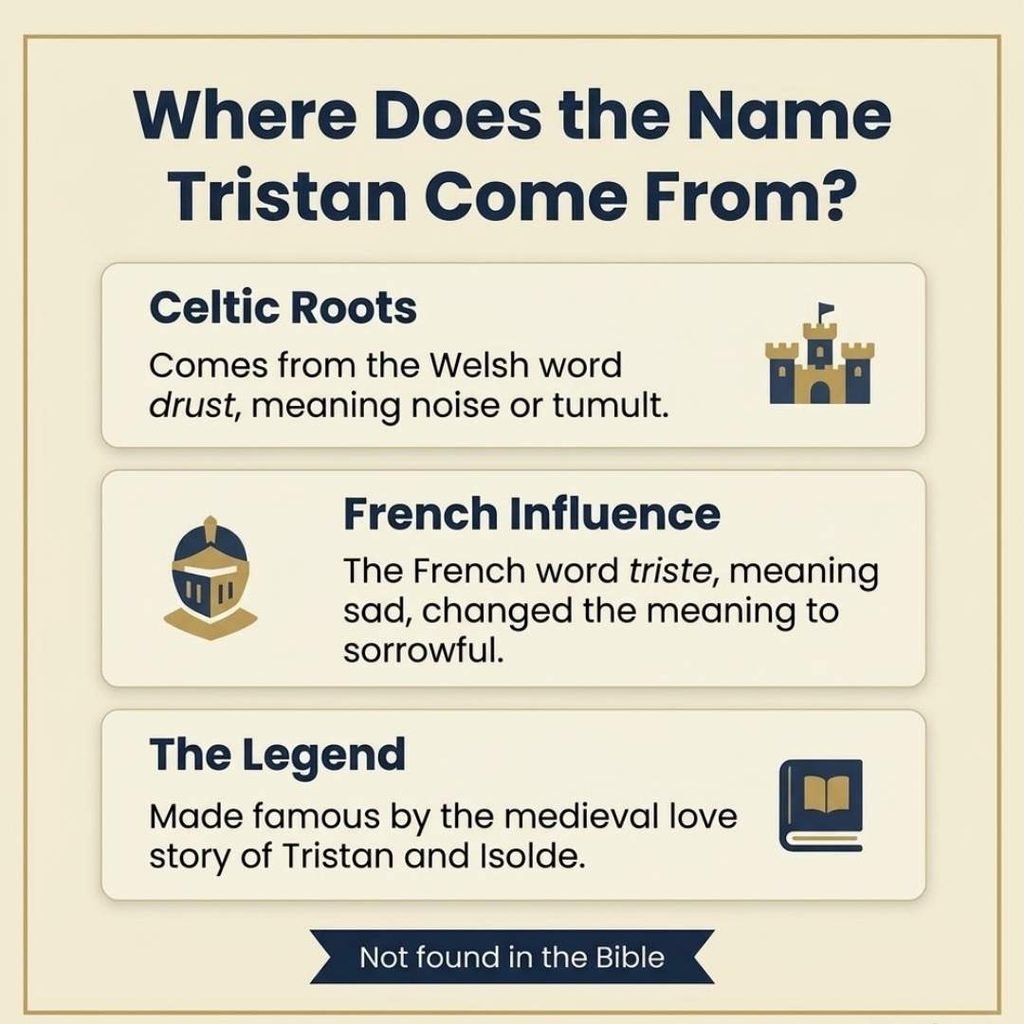
The true meaning of Tristan has two layers. The first layer is Celtic. The second layer is French. Together they explain why people describe the name in different ways.
The Celtic Roots of Tristan
The oldest form of the name is Drustan. It comes from ancient Brythonic language groups in Britain. According to Wikipedia’s entry on the name, the Welsh word drust means noise or tumult. Some writers connect it to the clash of weapons in battle.
In this early sense the name sounds bold and loud. It suggests a fighter or a person with a big presence. That is very different from the sad meaning most people know today.
The Old French Twist
Medieval writers in France told the story in their own language. They changed Drustan into Tristan. The new spelling looked and sounded like the French word triste. That word means sad. The Latin root is tristis, which also means sorrowful.
Linguists call this a folk etymology. It means people gave the name a new meaning because it sounded like another word. The name Tristan also had a sad story attached to it. So the sorrow meaning stuck. Baby name sites like Nameberry now list the meaning as noise or sorrowful. The Bump lists it as sad or melancholy.
The Meaning in Simple Terms
Here are the main meanings people give the name today:
- Noise or tumult from the Welsh word drust
- Sad or sorrowful from the French word triste
- Bold or courageous in some Welsh and Breton readings
- Melancholy in many modern baby name guides
The Story That Made Tristan Famous
The name became well known through a medieval love story. Tristan and Isolde was told across Europe for hundreds of years. Tristan was a knight from Cornwall. He was sent to bring an Irish princess named Isolde to marry his uncle King Mark.
On the trip the two fell deeply in love. Their love could not last. The tale ends in grief and loss. This tragic ending is why the name became tied to sadness in the public mind.
Writers and composers kept the story alive. Richard Wagner wrote a famous opera about it in the nineteenth century. The tale also became part of Arthurian legend. This is why the name feels romantic and old fashioned at the same time.
It is worth noting that this story has nothing to do with Scripture, It comes from European folklore. It shows how a name can gain a meaning from a story rather than from a Bible verse.
Why People Look for a Biblical Meaning of Tristan
There are a few good reasons why this search is so common. Many families pick names with faith in mind. They want to know that a name fits their beliefs. A name with a sad meaning can also raise questions. Some parents worry it might bring bad luck or a heavy spirit.
Others already have a child named Tristan. They want to explain the name in a positive way. Or they are writing a baptism card or a family blessing. In each case the reader wants comfort and clarity.
The good news is that Scripture has a lot to say about sorrow. It does not ignore pain. It shows how God meets people in hard moments. That gives the name Tristan a meaningful place in a faith setting even without a direct Bible mention.
Does Tristan Have a Hebrew Meaning?
Some websites claim Tristan has a Hebrew meaning. You may see words like etzev or tikvah in these posts. Please be careful here. Tristan is not a Hebrew name. It did not come from the Hebrew language.
Hebrew has several words for sorrow. Writers sometimes borrow those words to build a spiritual meaning for Tristan. This can be a nice devotional idea. But it is not the real history of the name. If you see a page claiming a Hebrew origin, treat it as a creative reflection.
A trusted name dictionary or a language resource will always list Tristan as Celtic and French. That is the safest answer to give.
Bible Characters Whose Stories Match the Meaning of Tristan
The name may not be in the Bible. But its sorrow meaning matches many Bible stories. Here are a few people whose lives show pain turning into hope:
- Job lost his family and health but stayed faithful and was restored.
- David poured out his grief in the Psalms and ended with praise.
- Joseph suffered betrayal and prison before he was raised to lead Egypt.
- Hannah wept for a child and later gave thanks when Samuel was born.
- Paul faced beatings and jail yet kept sharing his faith with joy.
These stories share one clear message. Sorrow is real but it is not the last word. God walks with people through hard seasons. That is a helpful lens for anyone who loves the name Tristan.
Bible Verses That Fit the Sorrow to Joy Theme
If you want a verse to go with the name, these are strong choices. Psalm 30:5 says weeping may last for a night but joy comes in the morning. This is one of the most loved verses about hope after pain.
Psalm 34:18 tells us the Lord is close to the brokenhearted. It offers comfort to anyone who feels low. John 16:20 records Jesus telling his followers that their grief would turn into joy. Isaiah 61:3 speaks of beauty in place of ashes.
You can use any of these on a birth announcement or a keepsake gift. They give the name a warm and faithful frame. They also keep the message honest. You are not saying Tristan is in the Bible. You are saying the name matches a truth found in it.
Biblical Names With a Similar Meaning
If you love the sorrow meaning but want a name that is truly in Scripture, there are options. Some Bible names carry a close idea. Here are the best known ones:
- Benoni means son of my sorrow in Genesis 35:18 before it became Benjamin.
- Mara means bitter and was the name Naomi chose in Ruth 1:20.
- Jabez is linked to pain and appears in 1 Chronicles 4:9.
- Barnabas means son of encouragement and is a hopeful New Testament name.
- Isaac means laughter and shows joy coming after long waiting.
Each of these names has a story attached to it. Benoni is a lovely example. His mother Rachel named him in her pain. His father Jacob changed it to Benjamin, which means son of the right hand. That small change shows how God can reshape sorrow into blessing.
Is Tristan a Good Name for a Christian Child?
Yes it can be. Christian families use many names that are not in the Bible. What matters most is the heart behind the choice. A name can carry love and prayer no matter where it began.
Some parents prefer the older Celtic meaning of noise and boldness. Others enjoy the French link to sorrow and the story of endurance that follows. You can also point to the courage side found in some Welsh and Breton readings.
A few simple ideas can help you make the name feel rooted in faith:
- Pair Tristan with a Bible middle name like David or Joseph.
- Choose a memory verse such as Psalm 30:5 for the child.
- Tell the child the story of how the name was chosen.
- Pray over the name at a baby dedication or baptism.
This approach lets you honor both the name and your beliefs. It also avoids claiming something that is not true about the name’s origin.
Popularity and Famous People Named Tristan
Tristan has stayed a steady favorite for decades. The Bump lists it as a name used for both boys and girls. It is more common for boys. It rose in popularity in the late twentieth century. Actor Chris Hemsworth gave the name to one of his sons in 2014 and that added fresh attention.
Well known people with the name include basketball player Tristan Thompson and drummer Tristan Evans of the band The Vamps. The poet and artist Tristan Tzara helped start the Dada movement in Europe. These examples show the name works in sports and music and art.
Common spelling variations include Tristen and Tristian. The older form Tristram is also still used. All of these share the same roots.
Tips for Writing About Tristan in a Faith Setting
If you plan to share the name meaning in a church card or a family post, keep it simple and true. Start with the real origin. Then add your own faith reflection. This gives readers both facts and heart.
A good sentence might say that Tristan comes from Celtic and French roots and that it reminds us of God’s comfort in hard times. That is clear and honest. It also respects the reader.
Avoid saying the name appears in Scripture. Avoid claiming a Hebrew origin. Stick to what history shows. Trust builds when facts are correct.
Frequently Asked Questions
Is Tristan a biblical name?
No. Tristan is not found in the Bible. It has Celtic and Old French roots and became famous through medieval legend.
What does Tristan mean spiritually?
Spiritually people link Tristan to sorrow that turns into hope. This is a reflection based on themes in Scripture and not a direct Bible meaning.
What is the Hebrew meaning of Tristan?
Tristan has no true Hebrew meaning. It is a Celtic and French name. Any Hebrew link found online is a creative devotional idea.
Is Tristan a good name for a Christian?
Yes. Many Christians use names that are not in the Bible. You can add a Bible middle name or verse to give it faith meaning.
What is the origin of the name Tristan?
Tristan comes from the Welsh word drust meaning noise. French influence from triste added the meaning of sad or sorrowful.
Conclusion
Tristan is not in the Bible. That is the clear and simple truth. The name grew from Celtic roots and picked up a sorrowful tone through French storytelling. The famous legend of Tristan and Isolde locked that feeling into place.
Even so the name can hold real faith meaning. Scripture is full of people who moved from tears to joy. Job and David and Hannah all show that pain does not have the final word. If you love the name Tristan you can pair it with a verse and a prayer and a family story. You do not need a Bible mention to give a name a blessing.
Pingback: Stream East Review: What Happened and Is It Safe in 2026? - Centowise
Pingback: Gitty or Giddy: Which Spelling Is Right? Meaning and Usage - Centowise
Pingback: Good Morning Saturday Blessings for Sweet Weekend Moments - Centowise
Pingback: Upon or Apon: Which Spelling Is Correct in Modern English? - Centowise
Pingback: The Biblical Meaning of the Name Logan: Origin and Symbolism - Centowise